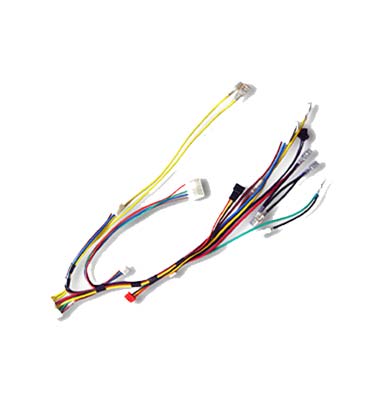
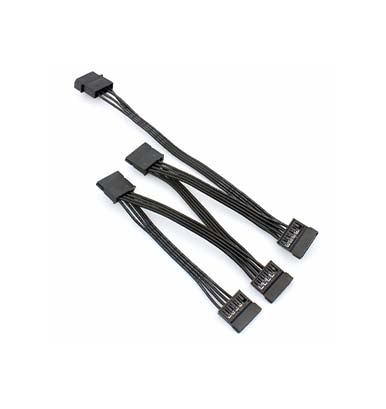
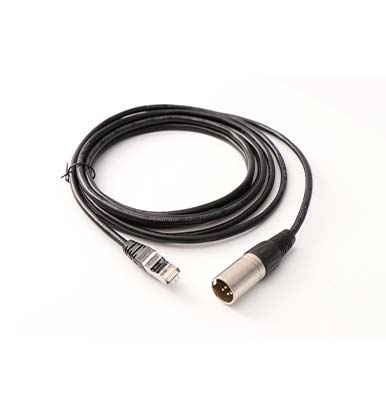
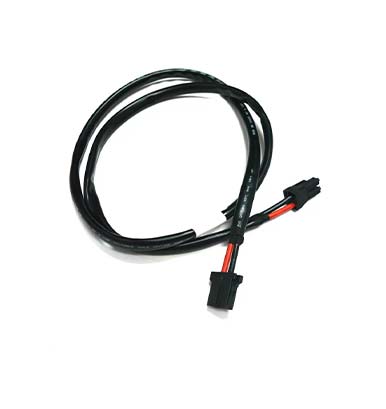
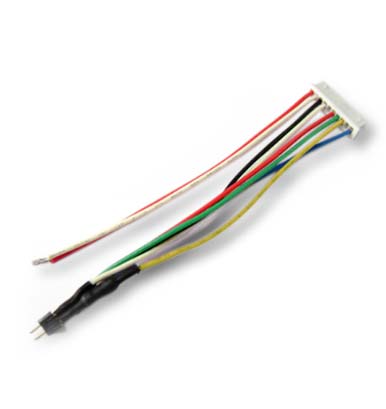
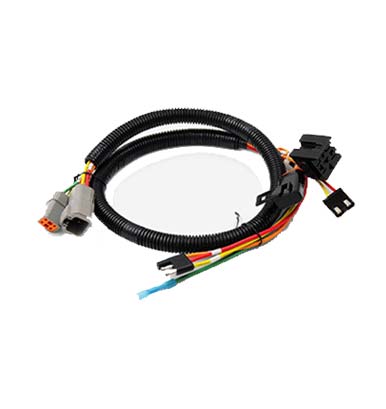
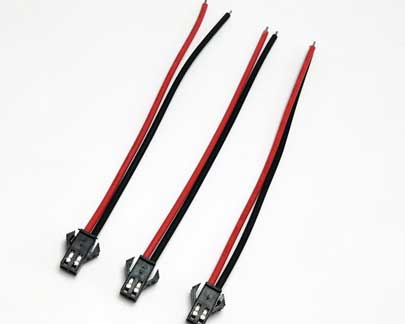
The Importance and Scope of Use of Home Appliance Wiring Harness
Dec 14,2022

In 2026, HDMI dominates modern displays, yet VGA cables remain essential for countless legacy systems, projectors, and industrial setups. Understanding the real differences helps you choose the right solution and avoid compatibility headaches.
At Holly Electronics, a specialized VGA cable manufacturer, we produce high-performance VGA cables while supporting customers transitioning between old and new technologies through VGA cable wholesale and custom cable harness solutions.
VGA (Video Graphics Array) is an analog video transmission standard introduced by IBM in 1987. It transmits only video signals and does not support audio.
Analog signal transmission
Maximum practical resolution: up to 1920×1200 (under optimal conditions)
No audio transmission
15-pin connector (HD-15)
Common in legacy systems and industrial equipment
Despite being an older technology, VGA is still widely used in industrial environments where system upgrades are costly.
HDMI (High-Definition Multimedia Interface) is a digital video and audio interface introduced in 2002 to replace analog standards like VGA.
Digital signal transmission
Supports audio + video in one cable
Resolutions up to 8K (7680×4320) depending on version
Supports HDR, HDCP, and advanced color formats
Widely used in consumer electronics
Feature | VGA | HDMI |
Signal Type | Analog | Digital |
Audio Support | No | Yes |
Maximum Resolution | ~1080p–1200p | Up to 8K (HDMI 2.1) |
Connector Type | 15-pin (HD-15) | 19-pin compact interface |
Signal Quality | Degrades over distance | Stable digital transmission |
Interference Resistance | Low | High |
Typical Usage in 2026 | Industrial & legacy systems | Consumer electronics |
Cable Length Performance | Good with shielding | Better stability overall |
The most important difference between VGA and HDMI is signal type:
VGA transmits analog signals, which are more sensitive to noise and degradation
HDMI transmits digital signals, which maintain accuracy even over long distances
In practical testing:
VGA signal quality may degrade by 10–25% over 15–20 meters if shielding is poor
HDMI maintains nearly 100% signal integrity within supported lengths
This is why HDMI is preferred in modern consumer devices, while VGA remains useful in controlled industrial environments.
Despite newer technologies, VGA remains widely used in:
Industrial control systems
Factory monitoring displays
Educational projectors
Medical imaging equipment
Legacy enterprise IT systems
According to industry estimates, over 30% of installed industrial display systems still rely on VGA connections in 2026, mainly due to long equipment lifecycle replacement costs.
HDMI is now standard in:
TVs and monitors
Gaming systems
Laptops and desktops
Streaming devices
Consumer electronics
You are working with legacy systems
Industrial or factory equipment requires compatibility
Budget constraints are important
Audio is not required
You need high-definition video (4K/8K)
Audio + video integration is required
You are designing new consumer electronics systems
Signal quality is critical over long distances
Even though VGA is an older standard, cable quality still plays a critical role in performance.
A professional vga cable manufacturer ensures:
Proper shielding design
High-purity copper conductors
Stable impedance control
Reduced electromagnetic interference (EMI)
This is especially important for vga cable wholesale buyers and system integrators working on large deployments.
1. What is the main difference between VGA and HDMI?
VGA is an analog video interface, while HDMI is a digital interface that supports both audio and video.
2. Is VGA still used in 2026?
Yes. VGA is still widely used in industrial, educational, and legacy systems where upgrades are not necessary or cost-effective.
3. Can VGA support Full HD resolution?
Yes, VGA can support up to 1080p under good conditions, but image quality may degrade over distance.
4. Why is HDMI better than VGA?
HDMI provides higher resolution support, digital signal stability, and audio transmission in a single cable.
5. What industries still use VGA?
Industrial automation, education, healthcare, and legacy enterprise systems still rely on VGA.
6. What should I look for in a VGA cable manufacturer?
Look for shielding quality, copper purity, OEM capability, certifications, and stable production capacity.
VGA and HDMI serve different roles in modern connectivity systems. HDMI dominates consumer electronics with high-definition digital performance, while VGA continues to support industrial, educational, and legacy systems where compatibility and cost efficiency are critical.
Understanding their differences helps engineers and buyers make better sourcing decisions—especially when working with a professional vga cable manufacturer or planning vga cable wholesale procurement strategies.
As a global connectivity solutions provider, Holly Electronics delivers reliable VGA cable products and advanced custom cable harness solutions to support industrial and commercial applications worldwide.